What does it mean to thrive in a world with AI?
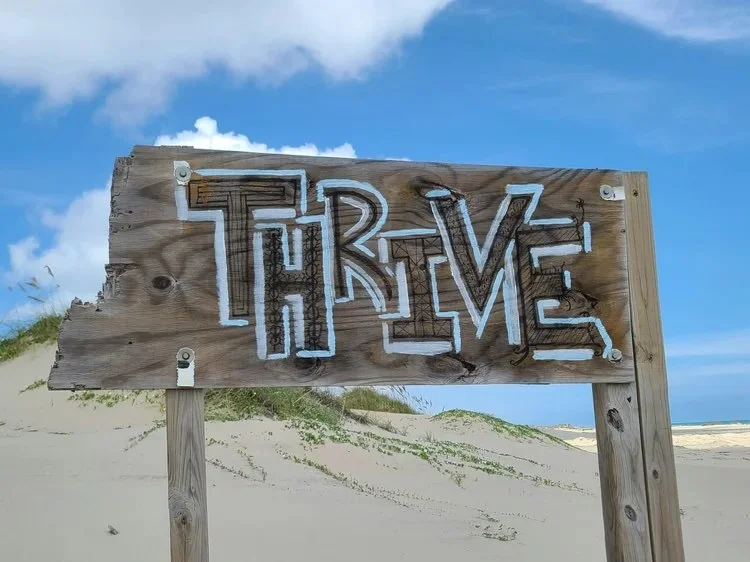
Src: Pete Alexopoulos Unsplash
The warm afternoon light spills over the cherry kitchen cabinets in our granddaughters’ house as they kneel next to each other at a counter dicing zucchini with little kid serrated knives.
The 5-year-old with butterfly-sticker tattoos up and down her arms saws zucchini slices into bite-sized pieces. Her pink-cheeked 2-year-old sister mimics the motions (coached by her grandfather) and does surprisingly well.
A bit later, as the aroma of sautéed onions and garlic fills the air, we start assembling the dish. Big sister gingerly places the sticky pasta on top of the savory tomato sauce, tofu ricotta, and lightly browned zucchini. While little sister kneels nearby, watching with her chin on her hand, taking it all in.
What does it mean to thrive? How can we create space for ourselves and others to thrive in the world with AI?
what does it mean to thrive?
For over a decade, I asked one question at every parent-teacher conference, year after year, daughter after daughter: “Is she thriving?” I wanted to know if they were flourishing. Were they challenged? Were they generous? And were they active in their circle of friends?
Although I don’t remember what the various teachers said, I do recall an appreciation for a question beneath all the status reporting on grades and participation in class. Little did I realize, until this moment, that’s a good question for me to ask as an adult too.
As I revisited the transcript from this month’s Thought Echoes Podcast featuring Fredric Marshall, I felt a smile coming back to my face. His contagious energy and his gentle optimism pulled me in from the start.
Fred is the author of Thrive: The Antidote to Future Shock. He describes thriving as intentionally building a resilient framework, a personal ecosystem that allows us to flourish. The framework includes mind and body, relationships and experiences, and contributions. But I’ll admit, what intrigued me most was how that philosophy extends to navigating a world with AI.
Fred and I discussed the broad emotional swings people have between fear and hype toward AI. Fred’s perspective was refreshingly grounded in his approach to navigating in an uncertain world — learning how, when, and if to use this new technology as a useful tool, even as a partner. To keep an open mind toward the possibility of flourishing and resist the impulse to dismiss or ignore AI by not engaging with it at all.
After our conversation, I found an interesting article aboutuncertainty. I always believed I was someone who ranked high on being comfortable with the unknown. As someone who saw uncertainty as a series of challenges that would lead to opportunities.
What surprised me is that we humans can want and not want something simultaneously. I was raised to value being decisive, complete with lists of pros and cons. You create scenarios, consider the pros and cons, and make a damn decision. The quicker, the better.
My planning gene is very strong (from my dad), along with my “everything will work out” gene (from my mom). The article included an insightful tip to add to the decision pro/con routine — pay attention to your stress level. The higher your stress, the stronger the pull for closure, and maybe you need to take more time to deliberate.
Now, I’m reflecting on my productive-self checking things off her to-do list and wondering if some days I’m more stressed and am feeling the need for more closure as a way to keep things in balance. My own thrive ballast. My sense of thriving requires an open mind to learn from unexpected consequences. I accept it but still ask what I’d do differently next time.
Perhaps that’s why AI provokes such strong reactions. It introduces another layer of uncertainty into our lives, and our sense of control over the tsunami that is AI is unsettling. We want to thrive, and it’s normal that we want and don’t want to engage with AI at the same time.
“This is a thriving book with a little bit of AI thrown in, because that’s the world we’re living in. So stay human, be yourself, have your goals and vision and values and the things that you care about, and then use AI when it fits and to your taste… But don’t try to force-fit it, because it’s not made for everything.”
how can we create space for ourselves & others to thrive in the world of AI?
Everyone wants to thrive, to have a fulfilling life. Yet there’s an undercurrent of uncertainty beneath the heartbeat of our lives. It seems every conversation I have with friends and family about AI reveals some tension.
How AI is changing the way some of them work and how they fear what seems inevitable — a replacement of their contributions. Others don’t want to engage at all because they see so many people overwhelmed. Yet, they still feel the need to engage somewhat, but don’t know how. Or still others are frantically trying to keep up and working with as many AIs as they can versus trying to remain focused on the task at hand.
What struck me when I researched adoption and usage stats for AI was that the numbers suggest we are engaging with it more every day, but we still don’t trust what information comes back at us or what impact it will have on our lives.
I recognize myself in those stats, the undeniable pull toward wanting to understand more; always on the hunt for additional information about longevity and maintaining a high quality of life for myself, my family, and my community.
When using AI, it’s in an effort to find ways to live more fully. To take advantage of the new technology to do things I could never do before. In my writing, I use it to fact-check. To brainstorm. To research options. To engage in a Socratic process when getting feedback that helps me dig deeper into areas I’m curious about — including AI.
For years, I’ve explored different ways to describe what happens when we interact with AI bots, this experience that feels like a conversation. Whether like the “hive-mind” in the TV show Pluribus where there’s a group consciousness that has access to a pool of answers or customer service where data from previous calls are logged and whoever is on duty can pick up where the last person left off.
Either way, I envision the AI Cloud shuffling itself and the answers coming each time from different combinations of bits and bytes; it's just a metaphorical who's on duty responding, but over time, the conversations do feel more personal than your generic customer service experience.
It’s more like having a personal assistant. You don’t have to schedule time; it’s always at your disposal, which is enticing. Yet I still use my intuition and get feedback from real people too. AI is only one input, a helper. I’m not handing my brain over to AI; that won’t help me grow. I still want to be challenged when working with AI, knowing how and when to is part of that challenge.
The technologies changing our lives may be external, but the deeper challenge may be internal: deciding what kind of attention, pace of interaction, and boundaries we create. Maybe the most important lesson in learning to thrive is preserving non-AI time to spend with friends and family.
***
Back with our granddaughters, at their sun-darkened walnut dining table, their “Papa” crafted as a wedding present to their parents, the girls asked for seconds of lasagna. It took a while for rosy cheeks to enjoy the slipperiness of the noodles, but she picked up steam once she figured it out, red sauce splashed all over her cheeks.
When I watch those two, each in their own little worlds, I can’t help but be curious about where their lives will bring them. Focused butterfly sister loses herself in artwork, while her bruiser sister can’t get enough of putting different-sized spheres together that I didn’t notice until she was done (and knocking down anything her older sister builds).
Our granddaughters are so different, a reminder that each of us has unique formulas for what makes us thrive at different times, and knowing it’ll change over time.
Each generation inherits a different world — and has to discover what thriving means for them. My parents’ generation grew up never knowing a world without airplanes. Ours, without televisions. Our kids’, without the Internet. And our grandkids will grow up never knowing a world without AI. The world is changing again — and we can’t put that genie back in the bottle. But, we can decide how to engage and when.
What do you need to thrive and how can you create space for yourself and others — with and without AI? Would love to hear your thoughts below.
We all embrace change differently at different times in our lives. If you’d like to continue the exploration during uncertain times —