How authentic are you?
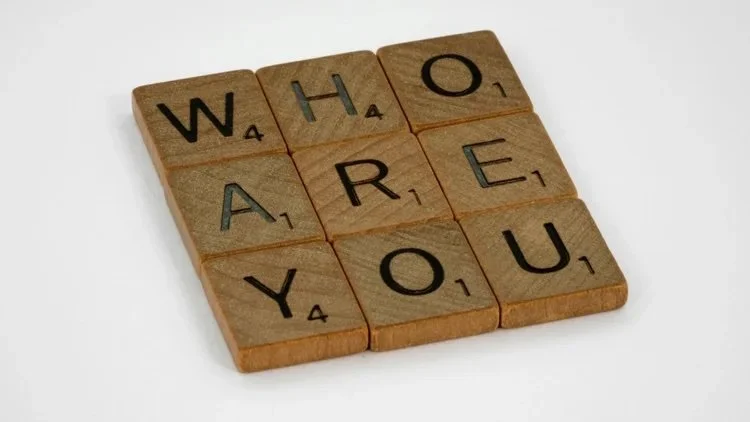
Src: Brett Jordan Unsplash
On a ride back with my dad to my college dorm at the University of Wisconsin-Madison, in the mid-1970s, I asked my dad to explain the Wall Street Journal stock pages to me.
After a pause, his eyes staring ahead at the sparsely populated Sunday afternoon freeway, he patted my knee. “It’s my job to make the money, little girl; it’s your job to spend it.”
I don’t remember what I said, or what we might have talked about the rest of the way on an hour-long trip to my dorm.
But I do remember feeling the space between us growing. The invisible separation that naturally develops with parents when you leave for college, to practice living on your own and figuring out what you are going to do with the rest of your life.
What does it mean to be authentic? And how does authenticity help us connect with others?
what does it mean to be authentic?
The simple answer is to be oneself. Yet authentic has an authority to it. Like it needs to be true on paper or in public.
Authentic feels like a test, as in — is an object authentic? Like with the recent death of the Japanese artist, Yayoi Kusama, who died at 97. There are questions from collectors who paid hefty prices on whether she was able to really sign the work that her “team made on her behalf.”
From a person’s perspective — authentic rings of honesty. Does the inside you, the private you at your core, match the public view, or is there a gap?
The ebbs and flows of figuring out who you are, what you represent, what your philosophy of life is. Those perspectives change over time.
How can they not? We are all becoming different people all the time. Back in college, was I old enough to be authentic yet?
When interviewing Judd Shaw, author of How to Live an Authentic Life, one phrase stood out. Judd spoke of listening for a “quiet hum of restlessness.”
When I was working back in corporate, my husband would say, “You get bored every two years.” At those times, it may have started out as quiet, but the undercurrent of something’s off became louder and louder.
For Judd, it was the uncomfortable realization that he’d become exceptionally good at performing his life. He talks about the hidden costs of quietly losing touch with himself, and the unexpected path that eventually led him toward a different understanding of authenticity.
“There’s a quiet hum of restlessness that’s underneath everything, that never goes away… that’s disconnection.”
Although initially I thought Judd’s message was aimed at guys, I realized after so many conversations with guys at work, there’s common ground to share.
When we lose ourselves to our work, we become disconnected from ourselves, regardless of gender. I’d get so wound up in whatever projects or revenue targets we went after, that I lost touch with the people around me — and with myself, and was often too tired to shift gears.
If I’m honest, I found myself performing for performance’s sake, to some unspoken script of what it took for a working mother to succeed, especially since I felt I was always proving myself to my dad, even long after he died.
Don’t get me wrong, I enjoyed most of my work, especially working with Hollywood, traveling around the world, and meeting so many interesting people.
But when the quiet hum started, I knew enough about myself to listen and figure out how I could pivot into something else that felt more like me. More authentic. Sometimes it was a new project, sometimes a new role, and sometimes making more room for what brought me creative joy.
how does authenticity help us stay connected with ourselves & others?
Over time, we all change, not just physically, but psychologically, experientially, and in our memories. We make micro-adjustments at our unseen private and all-too-public selves.
My question is — can one side of us be authentic while another isn’t? There are so many aspects of ourselves over time, and some days it feels like the quieter parts don’t get a vote when they all get together and have a confab. But maybe that’s the point; we’re each our own unique amalgamation.
My favorite line in Dr. Shana Garrett’s article about embracing authenticity is, “Be You, Because Everyone Else Is Already Taken.” Her advice on how to reconnect with ourselves and creatively channel it into projects or mentoring others is spot-on for the ebb and flow of our changing selves.
I love her reverse psychology encouragement too, “Pretending to be someone else is exhausting. It drains your energy, stifles creativity, and leaves a nagging sense of disconnection.” Who wants that?
***
Back in the car with my dad… with his hands on the steering wheel.
When the ERA passed in the spring of 1972, I was still in grade school. Too young to understand the details, but old enough to feel the importance. As the oldest of six girls ages 2 to 14, I remember reading Ms. Magazine, that Gloria Steinem co-founded the year I went into high school, a couple years before my car ride with Dad. I’d see the magazines at Philips Pharmacy, where I had a hard time choosing which candy to buy with my babysitting money when I was years younger.
My Dad’s comment in the car, about assigned roles — it was such a cold splash of water on the mentoring relationship I thought I had with him. One where he taught me about saving for retirement and mortgage rates. He even asked me to call his broker and record stock prices in a ledger he kept in his desk drawer at his office, where I worked. I felt grown up, getting a glimpse into his financial world.
Until his declaration of what job I was destined to play.
Yet, unconsciously, Gloria’s articles lit a little ember inside me. One I’d quietly nurture in my conservative household where chauvinism was alive and well. I had questions I knew not to ask — about what I wanted to be growing up. I did not want my mom’s life; I wanted my dad’s. Minus the chauvinism.
My perception of his freedom. It was his freedom to choose that I wanted—the opposite of ‘let’s wait and see what your father has to say.’ It was that sense of independence that lured me toward math.
When we’d get our report cards and a parent had to sign, it was usually Dad. As he glanced at my grades, he’d say (every time), “Math, it’s the only grade that counts.”
No wonder one of the subconscious reasons I went into computer science was because of that undercurrent of finding something that “counts.” Who knows what would have happened if I pursued my love of poetry instead?
At that moment, I knew I’d be a working parent, save for retirement as early as I could, and use my computer science degree, not realizing I had an undercurrent of Gloria Steinem’s voice telling me I could.
In that moment, Dad’s authenticity, his transparency was a gift. Despite my not agreeing with him, which carried its own power, I learned you can disagree and still love someone and be loved by them.
How does authenticity show up in your life? Would love to hear your inisghts below.