How can curious questions bring more meaning into our relationships?
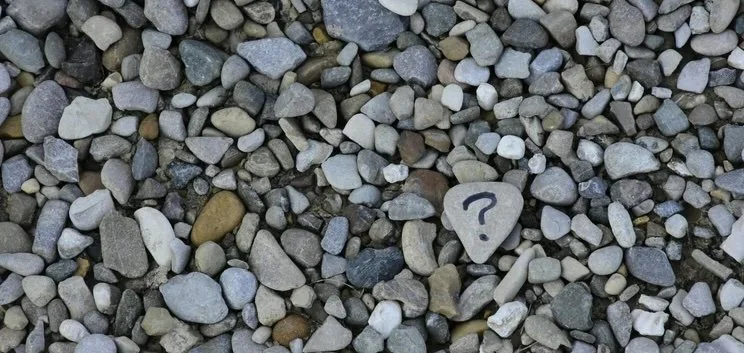
Src: Ana Municio Unsplash
We’re in the living room 30 years ago with old furniture I can’t even remember. I’m sitting on a sofa, holding our middle daughter at maybe six months old.
My eldest daughter plays with Legos or Lincoln Logs on the floor in front of me. The wife of a colleague, who was researching siblings, sits crisscross applesauce on the floor next to my daughter. The young woman researches siblings. Something about wanting to see if older ones revert to younger age behaviors once a sibling is born.
My 4-year-old, who usually peppers us with questions talking all day while awake, is suddenly shy with a stranger in the mix.
The lady interviewer starts asking my daughter questions and when she doesn’t answer. I answer for her, like my mother, who filled quiet voids with conversation.
The woman said, “I’d like your daughter to answer, please.” I become quiet and blush a bit.
Why do we ask questions? Why do they matter? And how can curious questions bring more meaning into our relationships?
why do we ask questions?
Apparently, girls aged four, are the most curious and ask the most questions, according to an UK study from the 2010s — 100s per day. Some of the most popular inquires were, “Why is water wet?” “What are shadows made of?” and “Where does the sky end?”
After a long day at work, coming home to two hungry little girls, our 4-year-old daughters’ favorite question for a while was, “Are we eating in or getting takeout?”
Our lives are filled with questions. Easy ones like what’s for breakfast and what will I wear to work? And existential ones like what’s the meaning of life and why am I here? It’s part of our brain’s make-up.
So what makes a good question? According to educator Karen Maeyens, “a good question is a sincere question that comes from genuine interest and curiosity and that seeks understanding.” She warns to beware of “Trojan horse” probing. “They are suggestions, statements, or critique disguised as questions. You can often tell them apart. By the way, they're said.”
why do they matter?
There are so many reasons questions help us. Not the least of which is adding to our brain’s knowledge database. They also help us collaborate better if we are open to someone else’s suggestions when working together. Or when curious, they help us learn something new when in conversation with people where we suspend judgment long enough to listen to what they have to say versus jumping to conclusions and judging them before they finish. And probably the most important for me is using questions as a way to reflect.
While running on the treadmill a few days into the new year, I listened to The Radio Hour with guest Krista Tippett. For over 20 years, she’s “refined the art of asking questions.” The topic caught my attention: Forget New Year's resolutions. For 2026, sit with a question instead.
Tippet suggests we forego resolutions and instead first pick an open-ended question to be our companion for the whole year.
Tiippet’s examples:
“What in the way I'm living now and working now depletes me, and what is life giving… and are the things I'm struggling with now the right things for me to be struggling with?"
"What amidst all that is breaking wants to be born that I can attend to?"
Sometimes the question changes in the asking or the waiting for an answer. According to Tippet, "It's letting things emerge… not grasping for the first thing that feels like an answer, but moving with curiosity towards it, testing it, and not feeling like it's a failure if it turns out… it's not the answer."
I’m reminded of Anne-Laure Le Cuff’s tiny experiments and being a scientist of your own life. Observe, craft a hypothesis, pose a question, and make a commitment to try something for a period of time. Do it, then wait for results versus jumping to conclusions like we/I often do.
The second aspect of this new ritual is to dwell in your question. Turn it over like a beautiful or intriguing object, and observe it. No expectations. No rushing to problem-solve your way to an answer – just sit, and dwell in our curiosity. More koan — a paradox to be meditated on, a bit of mind exploration.
how can curious questions bring more meaning into our relationship?
In this month’s Thought Echoes Podcast, I had a delightful conversation with Amy Leneker, author and recovering workaholic turned joy specialist. Amy wrote her latest book, Cheers to Monday, for people looking for ways to reduce stress in their lives after 10 words changed her life in two questions. She was at another doctor’s office visit trying to figure out why her health was deteriorating and new questions showed up on a questionnaire —“What Are Your Hobbies?” and “What Do You Do for Fun?” She had no idea.
Her secret might surprise you. It isn’t either or, about having stress or having joy, it’s about the resilient dance between them. Amy encourages us to not delay joy until later, but rather based on the research invites us to bring interludes of joy into our lives and watch our stress go down.
“The big aha moment for me was recognizing that joy was a wellness strategy. When we feel joy, the scientific makeup of joy builds resilience. It builds a buffer to burnout and stress.”
As Maeyens shares in her TedTalk, questions are the “secret juice in relationships.” She cites Todd Krishnan from George Mason University whose investigations found that “it's more important to be interested in cultivating and maintaining relationships than being interesting.”
Sometimes the simplest questions are the most revealing:
What is your earliest memory?
Have you ever egged someone’s house?
Did you have an imaginary friend as a child?
Do you prefer silence or background noise?
When do you feel most like yourself?
As my mother used to say when I was a teenager and we’d go to a party with people she didn’t know, “Ask people questions, be curious, and they will tell you something interesting about themselves.”
***
Back in the silent living room, my colleague’s wife repeats the question to my eldest daughter. Time passes like I’m in slow motion while the baby quietly nurses. Her big sister continues to play for a bit before looking me right in the eye.
“Mama, I think before I talk.”
My eyebrows raise, and a smile creeps up on my lips as I shake my head. She inherited that quality from her dad.
What questions do you hold inside, inviting you to explore and reflect? What if we swapped our New Year’s resolutions with a question instead? What would your New Year’s question be?
If this reflection resonated, I’d love to hear your thoughts below.
And if you’d like to continue exploring the nature of our thoughts, you can subscribe to Thought Echoes➚ my monthly newsletter.