Where do you feel like you belong?
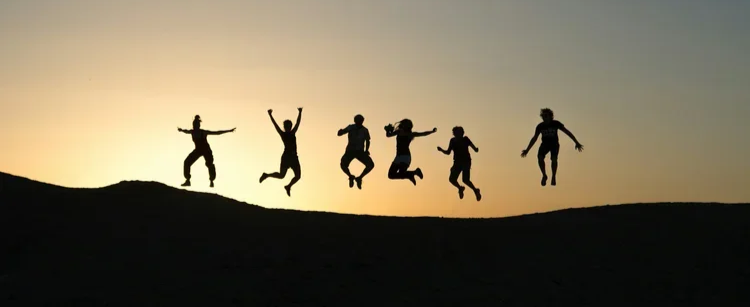
Src: Timon Studler Unsplash
The sliding door is open a couple of inches at the hotel we’re staying at on the Oregon Coast under a rare, cloudless Pacific Northwest sky. I’m up in the middle of the night listening to the sounds of ocean waves and looking for the Big Dipper. We’re celebrating the 51st anniversary of our first date — a half century ago.
It may sound corny, but I wondered where the time had gone — and when was the first time I felt I belonged in this relationship?
What does it feel like to belong? Why do we crave it? And how can we find connection in this fragmented, chaotic world all around us?
what does it feel like to belong?
According to Kim Samuel in “The New Psychology of Belonging,” a little over 80 years ago, Abraham Maslow published his “Theory of Human Motivation.” He helped reshape psychology by creating a new system to map our basic needs and higher aspirations as humans. "Maslow placed ‘belongingness’—what he described as the human need for interpersonal connection and acceptance — in a prime position in his hierarchy, just after the needs for food, clothing, shelter, and physical safety,” Samuel says.
For me, belonging feels calm, comfortable — like family. Well, maybe not always in the moment. Drama and insecurity sneak in sometimes, whether they are invited or not. But the concept of family feels warm, as in — I have one.
And we learn in, “The Psychology of Belonging: Why We Need to Feel Seen,” by Muhammad Tuhin, “It feels like warmth in your chest when someone really listens. Like ease in your breath when you don’t have to explain yourself. Like being able to rest—not because everything is perfect, but because you’re not alone in it.”
He goes on to share that, “Many of us spend years—decades even—wearing masks just to be accepted. We become shape-shifters, code-switchers, people-pleasers.”
How many times have I done that? If I dig deep, I know we have different selves we present in different situations, but somehow the idea of seeing those selves as masks caused me to pause. At times (especially at work), it felt easier to keep parts of me hidden than risk exposure and demonstrating I didn’t belong. There’s such a bro culture in high-tech. I often felt I needed to channel my inner tomboy; it was only about the numbers, not the psychology. Yet, there were a few managers where I felt seen.
Tuhin continues, “When someone looks at you—not with judgment or curiosity, but with recognition—it unlocks something ancient in your psyche. A kind of cellular exhale. Your shoulders relax. Your mask falls. Your voice returns.”
why do we crave belonging?
In this months’ Thought Echoes Podcast, I speak with poet Anna Citrino about her book Stories We Didn’t Tell. She talks about the quiet power of the stories our families carry but often don’t name. We explore silence, belonging, and how poetry gives shape to what lingers beneath the surface.
What stayed with me most was the idea that understanding ourselves sometimes requires returning to the land, the places, and the people we came from. To recognize the patterns that continue to ripple beneath our present-day experiences.
“I got out of the car and stood on the earth right outside of Wheatland, Wyoming, where my mom was born. It’s on the border of South Dakota, and I stood on this red rock. My mom had red hair. There was nothing visible in a built environment way, except for the road. As the rain came down, I felt I knew my mother in a way I’d never known her, like I understood her.”
Before Covid, when all my sisters were back in Wisconsin visiting Mom for another Estrogen Fest. She called her sister get-togethers Love-Ins. We were the next generation (think Lilith Fair vibe).
There was a reunion at a park in Dousman, Wisconsin, where a lot of my mom’s family was buried. There’s a lake named after her grandfather on the farm where she and her siblings spent their summers, including one when polio was rampant in the city. We walked around the property listening to Mom tell stories.
There’s a video of two of my sisters, one on either side of her, helping her over the uneven grass. She wore an aqua and tan flowered blazer. Her back to me as I filmed her sharing her memories.
Once inside the old barn, I remember she paused as she touched the wall — as if her memories came right out of the stone. That barn wall reminded me of the stone my childhood home was built with in the ‘60s. We played games on nearby farmland before it was developed. Back then, I had no idea Mom spent time on a farm when she was a little girl. For me, there was a pull toward the open space of the acres of dirt between plantings.
how can we find connection in this fragmented, chaotic world?
In early 2026, there was a report released on the state of how connected Americans felt. Over half did not feel connected, did not feel they were thriving. Initially, the results sounded familiar with people: “feeling isolated, weakened communities, and technology replacing relationships.”
The report identifies 6 points of connection:
Neighborhood Contact — know your neighbors
Community of Identity — shared life experiences
1-on-1 Relationships — family & friends
Third Place — outside of work or home
Community of Play — doing something with others you enjoy
Community Service — helping others
Third Place struck me. The rest in the list I was familiar with, but what is a “Third Place?” Do I have one? Do I need one?
The term originates from a 1989 book, The Great Good Place, by sociologist Ray Oldenberg, where he characterized third places as locations that encourage social interaction outside of work and home. Where you encounter “regulars.” Hard not to think of Cheers, where everyone knows your name.
Turns out my local coffee shop, around the corner, is my Third Place. I keep barista names in my contacts.
Where else do I feel I belong? In my own skin — despite sometimes squirming around in it as if it doesn’t fit. I’m reminded of David Whyte’s poem, “The House of Belonging,” where he writes, “…There is the temple / of my adult aloneness / and I belong / to that aloneness / as I belong to my life.” We may seek to belong with other people, but we also seek to feel comfortable in our own skins.
***
As I stare at the stars and periodically look over at my sleeping husband, there’s a bond that has strengthened in my memories over the decades. We’ve certainly experienced the range of ”in sickness and in health” with past brushes with medical issues and the richness of adventures taken together since we were in our teens. Of learning how to balance work, kids, and creative endeavors.
I don’t know the exact moment when I felt I belonged in this relationship. But I do remember being on the other side of sensing it in my bones.
The awareness crept up on me — where I felt so comfortable with this other human being, who full-body listened to me, that the idea of spending the rest of my life with him seemed so natural.
It almost felt like somehow, my future self was smiling at my teenage self. She was looking back fifty years, knowing what she knew — that all the “for better and worse” would be a rich adventure I wouldn’t regret.
Where do you feel like you belong?
If this reflection resonated, I’d love to hear your thoughts below.
And if you’d like to continue exploring the nature of our thoughts, you can subscribe to Thought Echoes➚ my monthly newsletter.